
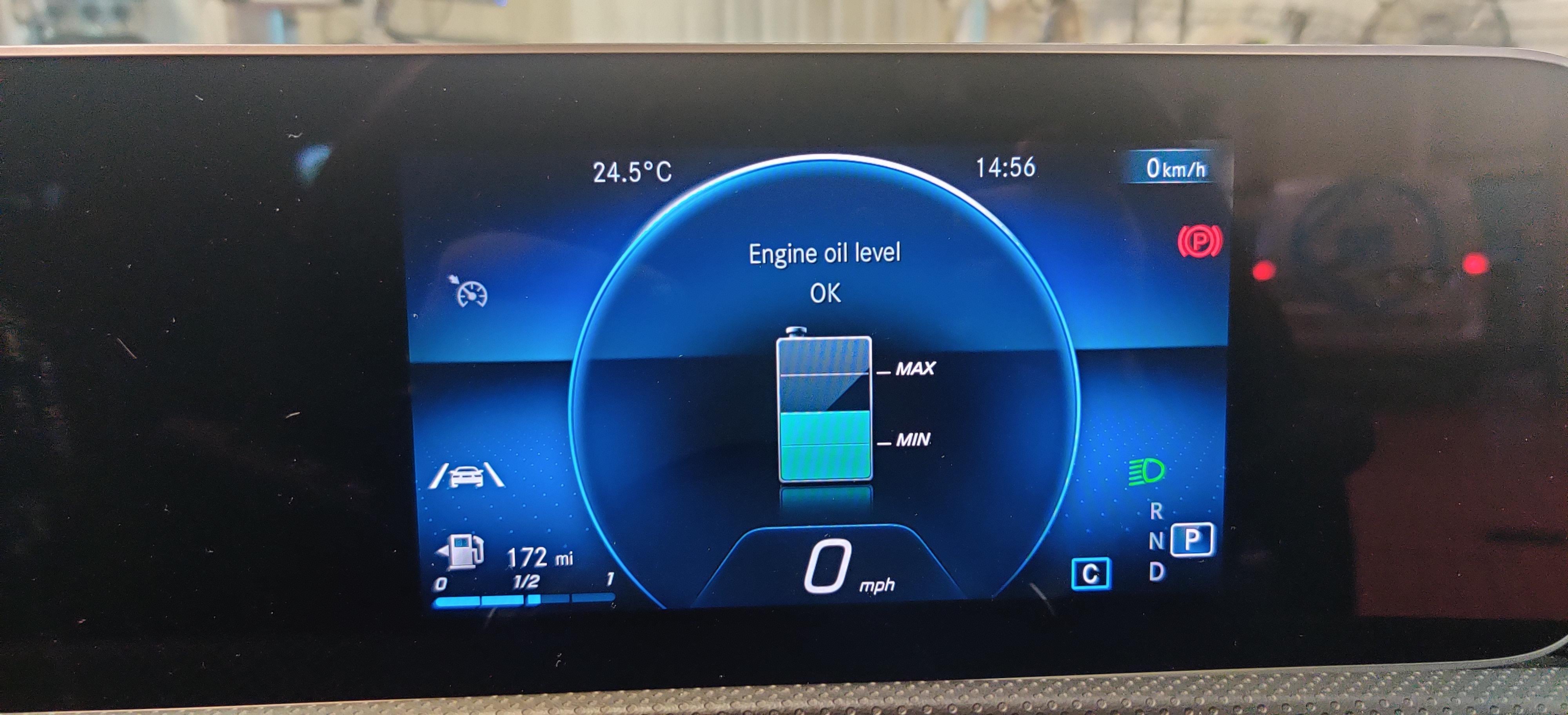
The traffic-light rule (works on 90% of dashboards)
Mercedes, like most manufacturers, colour-codes how worried you should be:
- Red - "Oi. Stop somewhere safe, soonish." Oil pressure, coolant temperature, charging, brakes, the red triangle.
- Amber / yellow - "Not on fire, but sort me out." Engine management, DPF, AdBlue, ESP, glow plug.
- Blue / green - "Relax, this is just information." High beam, indicators, cruise.
What no colour tells you is the actual fault. A glowing amber engine light could be a £30 sensor or a £1,500 turbo wearing the same costume. That's the whole reason we diagnose before throwing parts at it.
Red = stop soon. Amber = book it in. Blue/green = just information. The colour sets your panic level; only a scan sets the diagnosis.
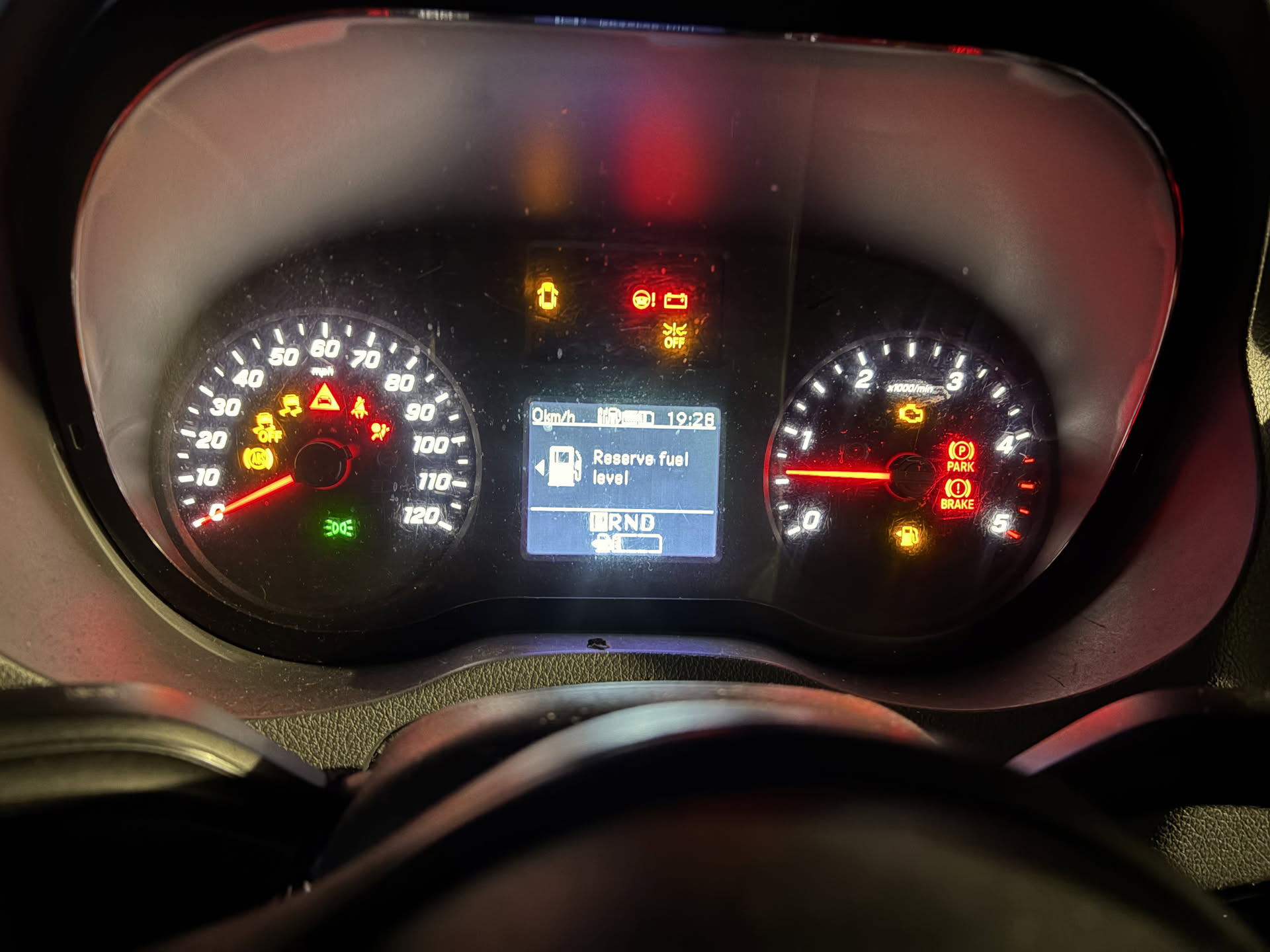
The usual suspects (and where to read more)
Engine management light - the dashboard's favourite cry for attention. Full rundown in our engine management light guide.
Red triangle / STOP - a general "something's up" prompt, often tied to charging, coolant or brakes. Don't keep driving and hope it gets bored.
DPF light - a clogging filter. Sometimes a decent run clears it; sometimes it's hiding something nastier - we get into that in when a regen helps vs when it makes things worse.
Limp mode / reduced power - the van's self-preservation mode kicking in. What a proper limp-mode diagnostic looks like.
ESP / ABS - usually a wheel-speed sensor. Your brakes still work, but the clever safety nets may switch themselves off.
The AdBlue countdown is the one that actually bites. When the dash starts showing "starts remaining," that's a hard deadline, not a suggestion - run it to zero and the van won't restart at all. Clearing the code doesn't reset it: here's why the countdown explained.
Why "just clear it" is a plaster on a bullet wound
Clearing a code turns the light off until the van notices the fault again - typically about two roundabouts later. Worse, it wipes the freeze-frame data - the snapshot of revs, load, temperature and sensor values from the exact moment the fault logged. That snapshot is often the single most useful clue we have, and a "clear all" button bins it for good. We diagnose first, clear second. Revolutionary, we know.
When to actually worry
Here's the quick triage we'd run through ourselves:
The reds that mean pull over now, not "later":
- Oil pressure (the little genie's-lamp symbol) - keep driving and you can wreck the engine in minutes
- Coolant temperature - overheating warps cylinder heads and cracks blocks
- Charging / battery - the van's running on borrowed time
- Brake warning - never a "see how it goes" light
- Red STOP triangle - the van has decided it's serious, so should you
Don't let an amber one become wallpaper, either - warning lights love picking their moment, usually the school run or a motorway slip road. We're mobile across Kent and SE London and can read the lot at your door.
Related reading
Need help with this?
We offer professional diagnostics for these issues. Book a visit or WhatsApp us.