
The short version: where to actually look
Climb into the driver's seat and look down and to the right, around the lower dash and steering column. Nine times out of ten the 16-pin OBD port is right there, sometimes behind a clip-out trim panel near the bonnet release handle.
The exact spot drifts a little between the W906 (2006-2018) and W907 (2018 on), so if you can't see it, have a feel around the footwell edges before you start dismantling the cabin in a rage.
On older Sprinters there's sometimes a round 38-pin "star" connector under the bonnet too - a hangover from the days before everything went 16-pin. You don't need it for most jobs, so don't panic if you spot a mystery round socket. It isn't aliens.
Why two sockets? A history lesson nobody asked for
OBD2 became the legal standard so any garage could read basic engine codes - great for emissions enforcement, less great if you actually want to know why your van's sulking. The 16-pin socket carries a few standardised channels (generic OBD2 "PIDs") plus the manufacturer's own private lines. A Sprinter runs dozens of control units - engine, gearbox, ABS, SCR/AdBlue, DPF, body, the lot - and a cheap reader only ever gets a polite wave from the engine one over those generic channels.
The £15 reader problem
Here's the bit the eBay listings leave out. A generic plug-in reader is brilliant at telling you there's a problem. It is hopeless at telling you what. It's the automotive equivalent of a smoke alarm: useful, loud, and completely silent on whether you've burnt the toast or the house is on fire.
It typically talks to one module - the engine ECU - reads a stored P-code, and that's about its lot. The AdBlue/SCR dosing system, the DPF soot model, the injector correction values, the gearbox and ABS modules - all running on Mercedes' own protocols - barely register that it's there.
We lose count of the vans that turn up after someone's "read the codes," cleared them, and driven off feeling like a hero - right up until the light pops back on at the next roundabout. (More on that cheerful cycle in our piece on what a proper limp-mode diagnostic actually looks like.)
A code reader tells you which system logged a complaint. It almost never tells you why. Those are two very different questions - and only one of them gets your van fixed.
What dealer-level kit actually sees
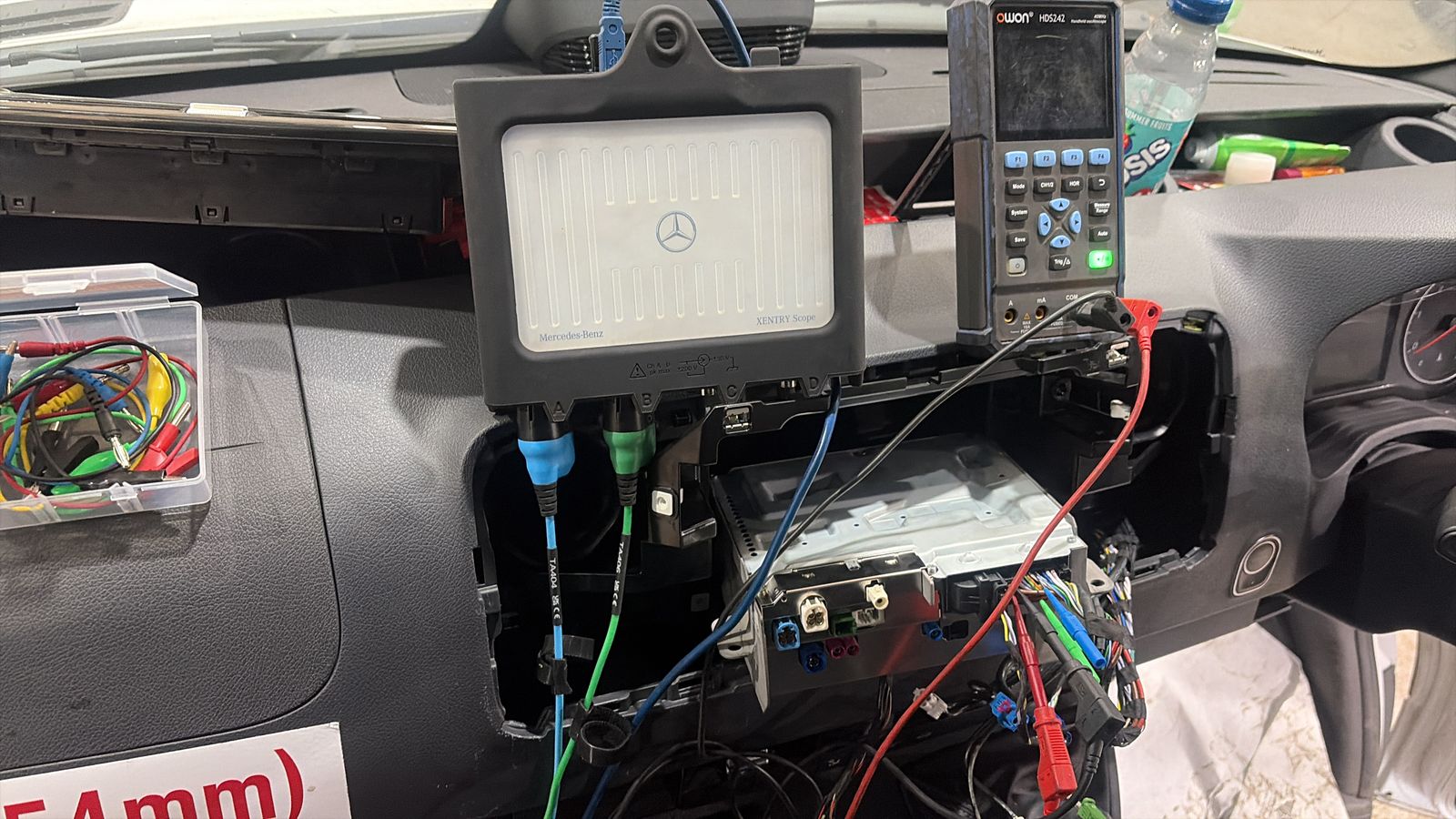
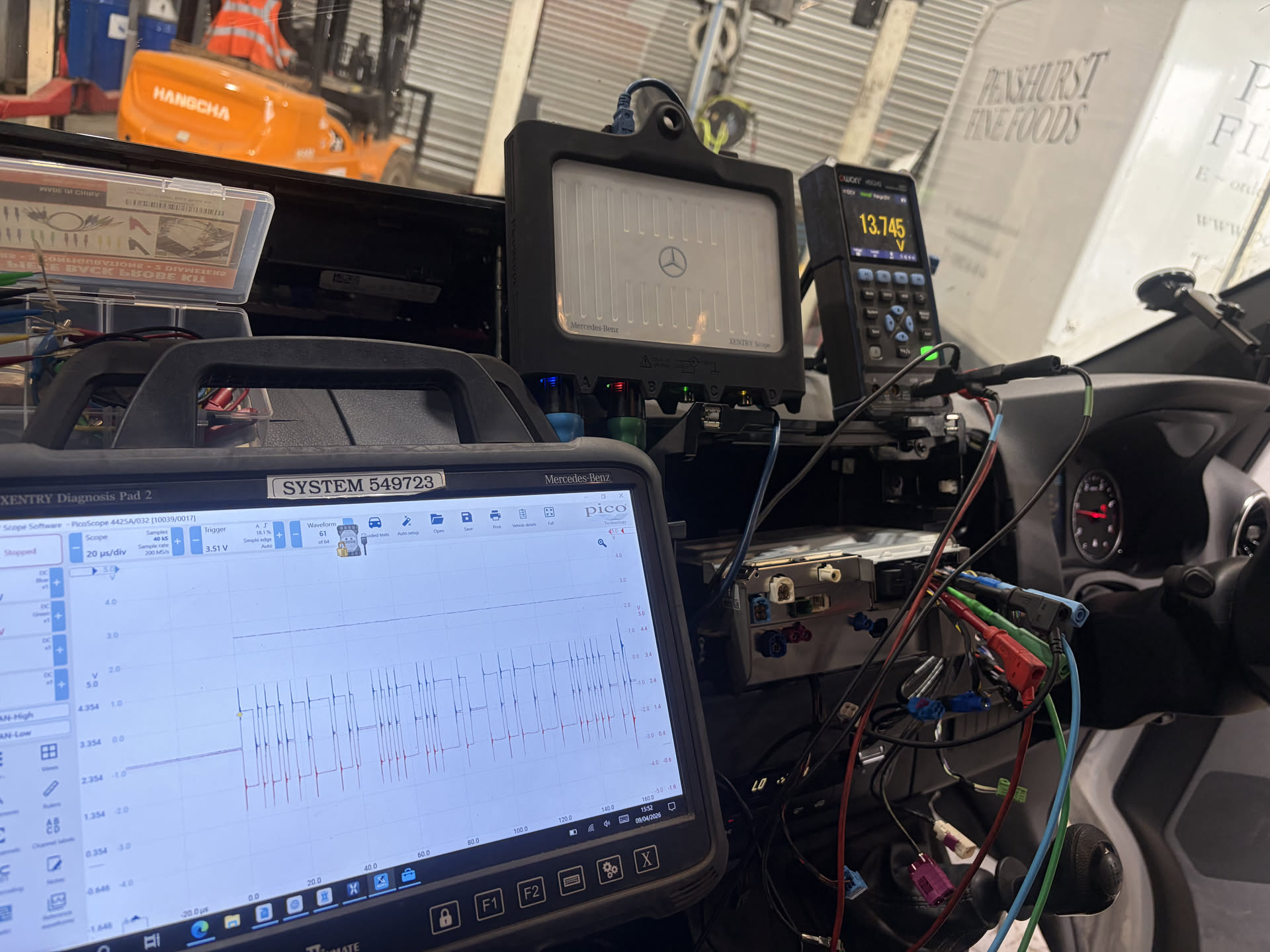
Plug Mercedes XENTRY/STAR into that same socket and the van suddenly gets chatty. Same port, wildly different conversation - the difference between "P-something, good luck" and "your downstream NOx sensor is reading implausible values, here's the proof." Here's the sort of thing that opens up:
- Every control unit on the van, not just the engine - gearbox, ABS, SCR, body, the lot
- Live sensor data: actual rail pressure, boost, injector correction values, DPF soot mass, AdBlue dosing
- Guided tests that walk a fault to its root instead of guessing
- Actuator tests - command the EGR, throttle flap or AdBlue pump and watch it respond (or not)
- Service and coding functions: forced regens, SCR resets, component coding after a repair
That's the whole gap in one sentence: a reader hands you a code; this hands you a cause.
So... do you even need us?
If your reader cleared a light and it stayed off, then honestly - great, crack on, we're genuinely pleased for you. But if it keeps coming back, if the van's in limp mode, or if there are no codes at all and it's still misbehaving (yes, that happens), that's the point where a proper read pays for itself. We come to you across Kent and SE London, plug into that exact socket, and leave you with a written answer instead of a shrug.
Related reading
Need help with this?
We offer professional diagnostics for these issues. Book a visit or WhatsApp us.